
Periodontal disease
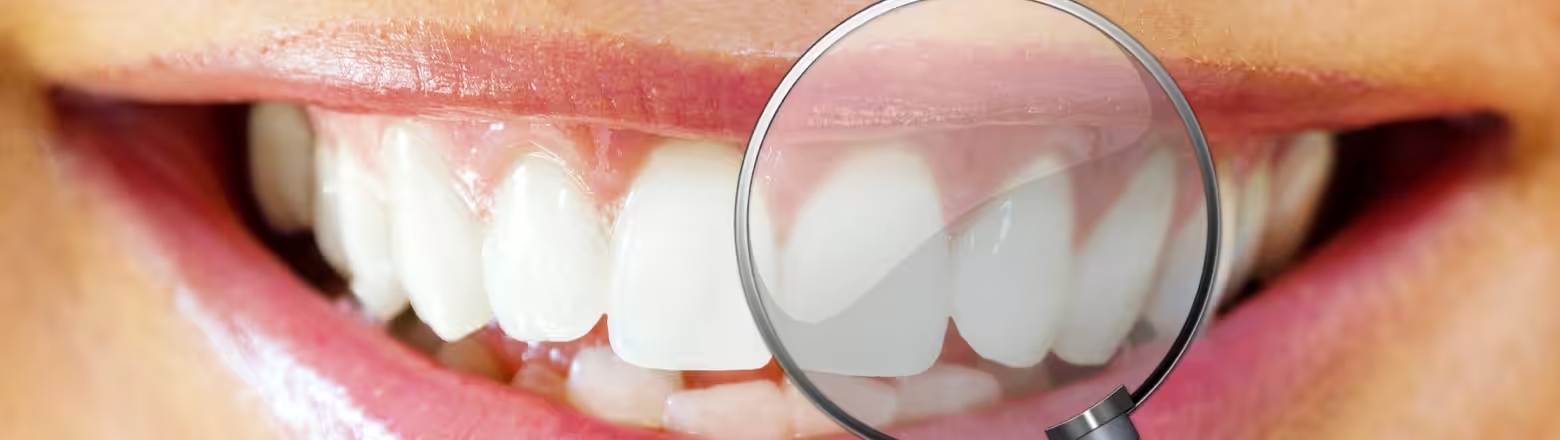
Periodontal disease is a Inflammatory disease of the tooth bed, in which the tooth-supporting apparatus is gradually broken down. The teeth themselves are often healthy - but they are still at risk: if left untreated, periodontal disease leads to loosening and ultimately to tooth loss. Statistically, periodontal disease causes more teeth lost than through tooth decay.
The cause is Bacterial plaque (plaque). Toxins from the metabolism of these bacteria penetrate the gums and trigger inflammation. Over time, the supporting tissue loosens and a Gum pocket is created - a protected space in which the bacteria can multiply unhindered.
As the inflammation progresses, it spreads to the jawbone. The teeth lose their hold - gradually at first, then increasingly noticeably.
Denis-Focus Dental - Technical information
Pale pink, fills interdental spaces completely, does not bleed on contact
Reddened, bleeds easily, swollen at the neck of the tooth - first preliminary stage: gingivitis
As the disease progresses, the gums recede, the teeth become visibly longer and begin to loosen. At an advanced stage, bone substance has already been lost.
Denis-Focus Dental - Technical information
A clean tooth does not get sick. In addition to brushing briefly after every meal, a daily Thorough cleaning of the interdental spaces essential to avoid bacterial deposits.
- Toothbrush & toothpaste - Basis for cleaning the chewing and lateral surfaces
- Dental floss - Careful but thorough removal of the plaque in the interstitial spaces
- Interdental brushes - especially for larger distances or prosthetic restorations
- Tufted brushes - for narrower spaces, bridges and individual tooth surfaces
- Toothpick - remove food residues and plaque deposits
- Medicated mouthwash - reduces the activity of the plaque between the teeth
Denis-Focus Dental - Technical information
Only through a Consistent analysis and an individually tailored treatment program the specialist dentist (periodontist) can reduce an existing inflammation and stop further bone resorption.
The bacterial plaque on the tooth and root surfaces and in the gum pockets is completely removed. Depending on the severity, a Multi-stage treatment program introduced.
Denis-Focus Dental - Technical information
The special cleaning technology contributes to 50 % of cases to stop periodontal disease. During a personal consultation, we will show you this technique and carry out the following treatments if required:
- Curettage - Professional cleaning of the gum pockets and root surfaces
- Professional oral hygiene - Thorough removal of plaque and tartar
- Drug therapy - Targeted antibacterial treatment if required
Our goal is to Stabilization of your teeth and the long-term preservation of your oral health.
Denis-Focus Dental - Treatment offer

Make an appointment for a personal consultation
Our experts will advise you individually and develop a treatment plan for you.