Zirconia Crowns – High-Quality Dental Crowns for a Natural Smile
Why Zirconia is Today's Gold Standard for Dental Crowns – and What to Look for When Choosing a Crown.
Denis-Focus Dental
Mosonmagyaróvár, Hungary
April 22, 2026Approx. 6 min. reading time
Zirconia crowns combine maximum stability with natural aesthetics – a real win for both function and appearance.
The most important things at a glance
Zirconium crowns made of highly stable, biocompatible zirconium oxide – completely metal-free.
They are translucent like natural teeth, making them look particularly real.
Extremely resilient – also in the posterior tooth area and for bridges.
At Denis-Focus Dental, they are manufactured digitally using CAD/CAM and are up to 50 % cheaper than in Austria.
What is a zirconia crown?
One Zirconia crown is a dental crown made entirely of zirconium oxide – a high-strength, biocompatible ceramic that represents the gold standard for aesthetic dental prosthetics in modern dentistry today. It replaces the visible part of a severely damaged or root-treated tooth or serves as an abutment on a Dental implant.
Zirconia is the same material used in orthopedics for artificial hip joints – it is extremely hard, fracture-resistant, and biocompatible. In dentistry, it is processed into ultra-thin, precisely milled crowns that are indistinguishable from the shape and color of natural teeth.
The advantages at a glance
Compared to traditional metal-ceramic crowns, the Zirconia crown a whole range of tangible benefits:
Metal-free and biocompatible: no metal allergies, no dark shadows at the gum line.
Natural Aesthetics Zirconia has a slight translucency that closely resembles a natural tooth.
High strength more fracture-resistant than glass-ceramics, therefore also suitable for molars and bridges.
Gum-friendly good tissue compatibility and lower plaque accumulation than with metal crowns.
Precise fit digital manufacturing with CAD/CAM technology ensures a perfect edge seal.
Durable A lifespan of 15 to 20 years is realistic – often significantly more.
„A zirconium crown combines the best of both worlds: the aesthetics of all-ceramic with the stability of a material used in joint prostheses."
Zirconia Crown vs. Metal-Ceramic and All-Ceramic
In dentistry, there are three common types of crowns. Which one is right depends on the tooth, aesthetic expectations, and budget.
The classic version: a metal core onto which ceramic is fused. Very stable, but less natural-looking. A dark line can become visible at the gum line because the metal core shows through. Today, it is considered outdated when aesthetics play a role.
Also metal-free, with excellent aesthetics – particularly suitable for front teeth. Slightly less durable than zirconia, and therefore not always the best choice for multi-unit bridges in the posterior region.
Zirconia crown
The combination of aesthetics and stability. Modern zirconia variants (monolithic or with aesthetic ceramic layering) can be used equally in the anterior and posterior tooth region and are also suitable for multi-unit bridges.
Wie entsteht eine Zirkonkrone?
The manufacturing process of a Zirconia crown is almost entirely digital today – and therefore extremely precise. At Denis-Focus Dental, the treatment proceeds as follows:
1. Tooth preparation
The tooth to be crowned is minimally ground down to make space for the crown. Zirconia crowns can also be made with less substance removal because the material is highly stable even with thin wall thickness.
2. Digital Footprint
Instead of an unpleasant traditional impression material, the impression is taken with a 3D intraoral scanner created – in minutes, without gagging, with the highest accuracy.
3. Digital Construction (CAD)
On the computer, the crown is precisely adjusted to your dental arch, your bite, and your desired tooth shape. You can see the planned shape on the screen before it's made—an important part of our Digital Smile Designs.
4. Milling from a Zirconia Blank
A computer-controlled milling machine cuts the crown from a single block of zirconia. It is then sintered in a high-temperature furnace, stained, and if necessary, veneered with ceramic for an especially natural appearance.
5. Integration
The finished crown is placed on the prepared tooth, checked for fit, and permanently cemented. The entire process takes only a few days, depending on the treatment plan.
Good to know
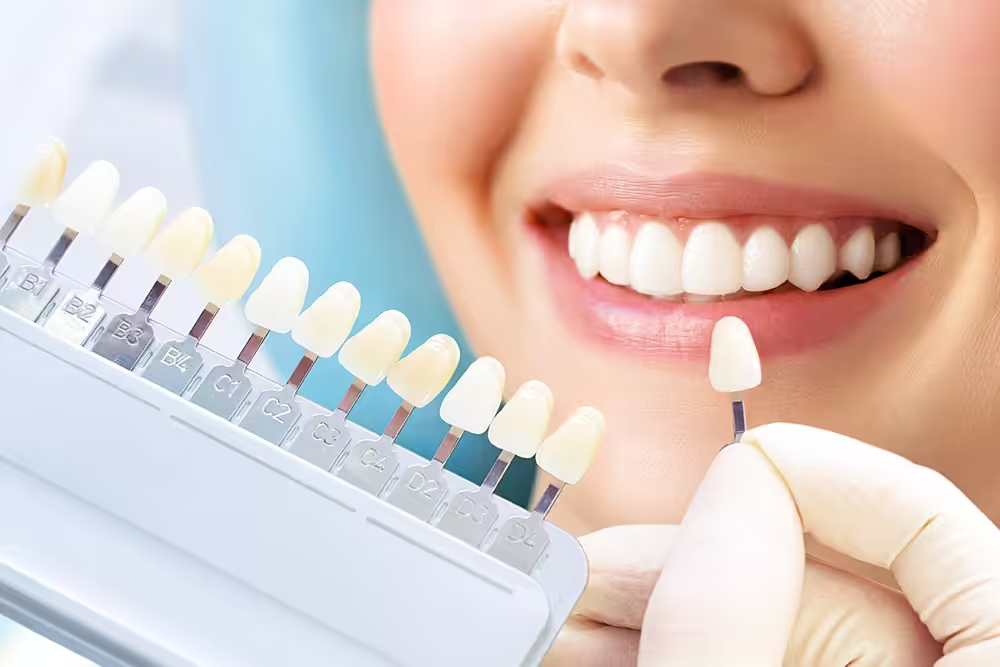
Zirconia crowns can be used in various Tooth colors can be manufactured – from bright natural white to warmer tones that perfectly match your neighboring teeth. The color selection is made using standardized tooth color charts.
Durability and Care
A well-maintained Zirconia crown lasts 15 to 20 years and longer. The crown itself is absolutely insensitive to discoloration and—unlike natural tooth enamel—does not stain from coffee, tea, or red wine.
Proper care of the underlying tooth and gums is important: regular brushing, flossing, or interdental brushes, and a professional dental cleaning twice a year ensure that the crown remains securely in place long-term and that no cavities form at the crown margin.
Costs in Hungary
One Zirconia crown Typically costs between 800 and 1,200 Euros per unit in Austria. At Denis-Focus Dental, you get the same crown, crafted with high-quality zirconium dioxide and modern CAD/CAM technology, for more than half of this price. The difference arises solely from lower operating and labor costs in Hungary – the quality is identical.
An individual Cost estimate We will gladly create it for you in German within 24 hours.
Frequently Asked Questions about Zirconia Crowns
One Zirconia crown is a high-quality dental crown made of zirconium dioxide – an extremely stable, biocompatible, and metal-free material. It replaces the visible part of a severely damaged or destroyed tooth and impresses with its natural aesthetics and long durability.
With proper care, a Zirconia crown on average 15 to 20 years, often longer. Good oral hygiene, regular professional cleanings, and dental check-ups are crucial.
Both are all-ceramic crowns. The Zirconia crown is made of zirconium oxide and is extremely stable – it can also withstand loads in the posterior teeth. Classic ceramic crowns made of glass-ceramic or lithium disilicate are particularly aesthetic and are ideally suited for front teeth.
Yes, zirconium oxide is one of the most biocompatible materials in dentistry. It does not cause allergies, is metal-free, and does not irritate the gums. This makes it suitable for patients with metal allergies or sensitive gums as well.
3D Intraoral Scanner – Digital Dental Impressions Without Gagging
How a small camera is replacing the classic dental impression – and why patients appreciate the digital scan.
Denis-Focus Dental
Mosonmagyaróvár, Hungary
April 28, 2026Approx. 5 min. reading time
The intraoral scanner replaces the unpleasant impression material – a precise 3D model of your teeth is created in just a few minutes.
The most important things at a glance
A Intraoral scanner creates digital 3D impressions of teeth – without impression material.
No gag reflex, no sticky paste, no waiting for it to cure.
Higher precision than traditional impressions – with micrometer accuracy.
Ideal basis for crowns, bridges, splints, and complete digital treatment planning.
What is a 3D intraoral scanner?
A Intraoral scanner is a modern handheld device the size of an electric toothbrush that captures teeth in three dimensions with an integrated camera. The dentist gently guides the scanner through the oral cavity, creating a precise, colored 3D model of your teeth on the screen in real-time.
This technology replaces the classic dental impression with a plastic molding material, which many patients remember from the past as unpleasant. Instead of a paste that has to harden in the mouth for several minutes, a quick scan with the scanner is now sufficient – faster, more precise, and more comfortable.
„The digital footprint has completely changed dental visits for many patients – pain-free, comfortable, and done in just a few minutes."
The Benefits for Patients
The Intraoral scanner is not only technically impressive, but offers concrete benefits that you as a patient will directly feel:
No gag reflex The most common reason for stage fright is completely eliminated.
No unpleasant taste: no impression material, no aftertaste, no waiting time.
Faster: A full scan of both jaws usually takes less than 10 minutes.
More precise: Micrometer accuracy, which is rarely achieved with traditional impressions.
Repeatable If needed, a section can be rescanned immediately without repeating the entire impression.
Directly visible: You see the 3D model live on screen – your teeth in full detail.
Digital Scan vs. Traditional Impression
The difference between the two methods is dramatic – not just in comfort, but also in data quality:
Classic impression
A plastic material is placed in a metal or plastic tray and pressed firmly into the mouth for 2–5 minutes. The material must harden while the patient remains as still as possible. If the tray slips or the patient moves, the entire process must be repeated. The impression is then sent to a dental laboratory, where a model is cast in plaster.
Digital scan with intraoral scanner
The dentist gently moves the scanner through the mouth. No paste, no impressions, no curing. The data is digitally transmitted to the lab, where CAD planning can begin immediately. The fabrication of crowns or bridges often starts the same day.
What treatments is it used for?
The Intraoral scanner is used in almost all treatments that require a precise dental impression:
A Intraoral scan is incredibly simple. You sit back relaxed in the treatment chair, and the dentist gently moves the scanner around your teeth. You can breathe normally, keep your eyes open – there's nothing filling your mouth. The entire process usually takes between 2 and 10 minutes, depending on whether just a single tooth, one jaw, or both jaws are being scanned.
Good to know
The 3D data created by the scan can be Save permanently. This is a real advantage: for later treatment, you and your dentist will have immediate access to an exact digital copy of your bite.
Frequently Asked Questions about Intraoral Scanners
A Intraoral scanner is a modern dental device that captures teeth in three dimensions using a small camera. Within minutes, a precise digital 3D model of the teeth is created – without traditional impression material and without gagging.
No – the digital impression is completely painless and clearly more pleasant than the traditional impression. There is no gag reflex, no sticky paste, and no waiting time.
A digital footprint with the Intraoral scanner depending on the scope, takes between 2 and 10 minutes. Just a few minutes later, the patient and dentist see the finished 3D model on the screen.
Modernity Intraoral scanner working with an accuracy of a few micrometers. In many cases, they are more precise than traditional impressions.
Why dental implants are the gold standard for tooth replacement today – and how you can save up to 50 %on costs in Hungary without compromising on quality. With a success rate of over 95 %.